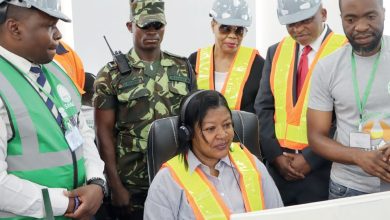
National Planning Commission (NPC) has shifted focus to high-priority agricultural and industrial value chains to accelerate growth and salvage Malawi 2063 targets.
The long-term strategy seeks to make Malawi “an inclusively wealthy, self-reliant, industrialised, upper-middle-income country by 2063”, but sluggish growth has put the ambition under threat.
Speaking at a high-level retreat in Lilongwe yesterday, NPC chairperson Richard Mkandawire said the mid-term review of the First 10-Year Implementation Plan (MIP-1), exposed the urgency to accelerate implementation.
He said Malawi must concentrate resources on selected value chains that can fast-track commercialisation, boost manufacturing and create jobs.
Gross domestic product (GDP) per capita has stagnated at about $600 against the $1 200 benchmark for lower middle-income status, while only three of the seven Sustainable Development Goals (SDGs) tracked in the review are on course, he said.
“We are saying it is time to change gear. A few value chains need special attention. Some are attainable in moving towards commercialisation as well as fast-tracking manufacturing opportunities,” said Mkandawire.
Malawi’s average growth of two percent in recent years is below the population growth rate of about 2.6 percent, eroding living standards.
Mkandawire cited cotton, chillies, mangoes and spices as value chains capable of delivering quick wins, while macadamia, avocados, pepper and vanilla remain longer-term prospects.
Cotton, he said, offers potential beyond primary production into garment manufacturing, while chillies have strong demand in Far Eastern markets.
“We are not meeting the demand yet, but we need very strong research and development,” he said.
Prioritising selected chains does not mean abandoning mining and manufacturing, he added, noting that mining needs stronger regulation while manufacturing remains critical, particularly fertiliser production.
Chief Secretary to the Government Justin Saidi admitted progress has been slow, but said Malawi could still recover if government, the private sector and development partners jointly mobilised resources and prioritised interventions.
“We still have resources. All we need is to plan well and reach the targets we have set. We need dedication from MDAs [ministries, departments and agencies], the private sector and our development partners,” he said, adding that government will introduce 100-day progress reviews.
But African Institute for Development Policy executive director Eliya Zulu described the current trajectory as a crisis.
“We were supposed to be growing at seven to eight percent. We have grown at two to three percent in most of the past years, so even if we grow at eight percent for the remaining years, it will take us to middle-income status in 2050,” he said.
Bankers Association of Malawi president Phillip Madinga said the proposed value chains could diversify the economy, adding that banks are ready to finance viable projects as government reduces domestic borrowing.
“Time is gone when banks were getting easy money from government. Now banks are looking for such projects. What is key is markets and value,” said Madinga, who is also Standard Bank Malawi chief executive.
Governance activist Michael Kaiyatsa cautioned that the plan will fail unless ambitions are matched with measurable targets, adequate budgetary allocation and clear accountability.
A progress report in the 2026 Economic and Fiscal Policy Statement shows government rolled out 87 percent of planned MIP-1 interventions, but only 40 percent are on track.
To close the gap, government is developing an MIP-1 Accelerator Programme to fast-track high-impact interventions and push growth above six percent.
Economics Association of Malawi president Bertha Bangara-Chikadza previously blamed capacity constraints, financing shortfalls and repeated shocks, not design flaws, for the gap.
Malawi’s economic growth stood at 4.6 percent in 2021 before slowing sharply to 0.9 percent in 2022. It recovered to 1.9 percent in 2023 and 2.7 percent in 2024. Growth was estimated at 2.7 percent in 2025, with a projection of 2.8 percent for 2026.
The figures underscore the scale of the challenge facing MIP-1, which was launched on January 19 2021, as the first decade-long implementation phase of Malawi 2063.
Former NPC director general Thomas Chataghalala Munthali in 2024 stated that to achieve MIP-1 target of lower middle-income economy, Malawi needed to grow its economy by 10 percent or risk attaining the same 15 years later.
On the other hand, his predecessor Fredrick Changaya said the economic growth rate now needed to achieve the targets is 14 percent, a tall order for an economy growing at an average two percent per year.